Tuesday, November 1, 2011

Saint Pumpkin

It is now, according to the liturgical calendar of many Christian traditions, the Festival of All Saints. (Rumour has it that church officials moved it from mid-May to November 1st because Samhain and other pre-Christian seasonal observances were so compelling that the church adopted an "if you can't beat 'em, join 'em" approach.)

This day always puts me in mind of one of my favourite poets: Nancy Willard. Here is a poem of hers that--creepy and elegant by turns--draws together our seasonal folkways and the observance of Hallowmas/All Saints' Day:

SAINT PUMPKIN

Somebody's in there.
Somebody's sealed himself up
in this round room,
this hassock upholstered in rind,
this padded cell.
He believes if nothing unbinds him
he'll live forever.

Like our first room
it is dark and crowded.
Hunger knowns no tongue
to tell it.
Water is glad there.
In this room with two navels
somebody wants to be born again.

So I unlock the pumpkin.
I carve out the lid
from which the stem raises
a dry handle on a damp world.
Lifting, I pull away
wet webs, vines on which hand
the flat tears of the pumpkin,

like fingernails or the currency
of bats. How the seeds shine,
as if water had put out
hundreds of lanterns.
Hundreds of eyes in the windless wood
gaze peacefully past me,
hacking the thickets,
and now a white dew beads the blade.
Has the saint surrendered
himself to his beard?
Has his beard taken root in his cell?

Saint Pumpkin, pray for me,
because when I looked for you, I found nothing,
because unsealed and unkempt, your tomb rots,
because I gave you a false face
and a light of my own making.


--Nancy Willard, from her 1975 collection, "Household Tales of Moon and Water"

Monday, October 31, 2011

Quoth the Raven: Galore! Galore!

Samhain comes at sundown. The Celtic New Year signaled, for our ancestors, the end of a half-year's intense outdoor labour. Samhain ("sow-when", literally "summer's end") heralded the onset of the year's dark half, a time to come indoors, gather around the fire, share stories and music, and re-weave the deep roots of cultural wealth and wisdom that bond us to this dear old Earth. Samhain--or, if you prefer, "All Souls' Night"--is also a time to honour our ancestors and all other dear ones who've gone before us, a time to acknowledge and even befriend our grief. Older reflections may be found here and here and here.

It is a time to embrace the gapped and tattered nature of life. On a recent foraging walk in the woods with two of our WWOOF volunteers, one of them noticed that, in the woods, almost everything was nibbled at the edges. Every leaf, stone, hump of earth or bit of bark was food or shelter to some living thing. Most of the mushrooms we found had been delicately edge-munched to satisfy some itty-bitty appetite, but creatures seemed content to share. Nothing was left perfectly whole, but neither was anything eaten down to the stem. Just as all foodstuffs of substance were nibbled, so too were gaps quickly mitigated: an ongoing dance of presence-absence-presence. Edges were quickly claimed by lichen, mushrooms, and insects. Other creatures claimed hollows as water or food caches, hiding places or homes.

There is a word for this strange harvest-time ache of awareness, the wisdom that comes from working with bushel baskets and sharp-edged knives. The word is GALORE. It comes from a Gaelic term variously spelled gu leir, gu leoir, or gu leor. It means both "sufficiency" and "abundance." In the Gaelic worldview, we are surrounded by abundance--and we are also expected to honour this abundance by living within the limits of the goodness the natural world provides. There is no need to hoard or overconsume: with goods gathered sufficient to our needs, we have wealth galore. The key is to perceive and celebrate this basic truth: Enough IS abundance. Or, as a related Scottish proverb says, "enough is as good as a feast." Perhaps our greatest "sin," as humans, is our tendency to forget this truth, to hoard and grasp too much, to dwell in the illusion of scarcity so masterfully crafted by the magicians of merchandising. When we take only what we need and give the rest back, the anxieties dissipate and we are freed to unclench, to recreate, to heal and dream.

We have gathered in the gifts of the earth. We have harvested herbs, flowers, and vegetables from our gardens. (The land was gracious and merciful: when all of our squash vines withered, pumpkins and butternut vines sprang forth from last year's pig-grazing range and mostly ripened in time to harvest before the frost!) We have gathered berries and apples and preserved them for the cold months to come. We have respectfully raised and butchered birds for our winter meat. We have taken five well-tended pigs to the butcher so we may feed other families as well. We have foraged for wild mushrooms and harvested them gently, always leaving some for the rest of the woodland creatures to enjoy. Now the larder shelves and freezers are full and the dark is rapidly descending. Music of thankfulness wells up in us. We dwell in remembrance of all the lives that enable our own.

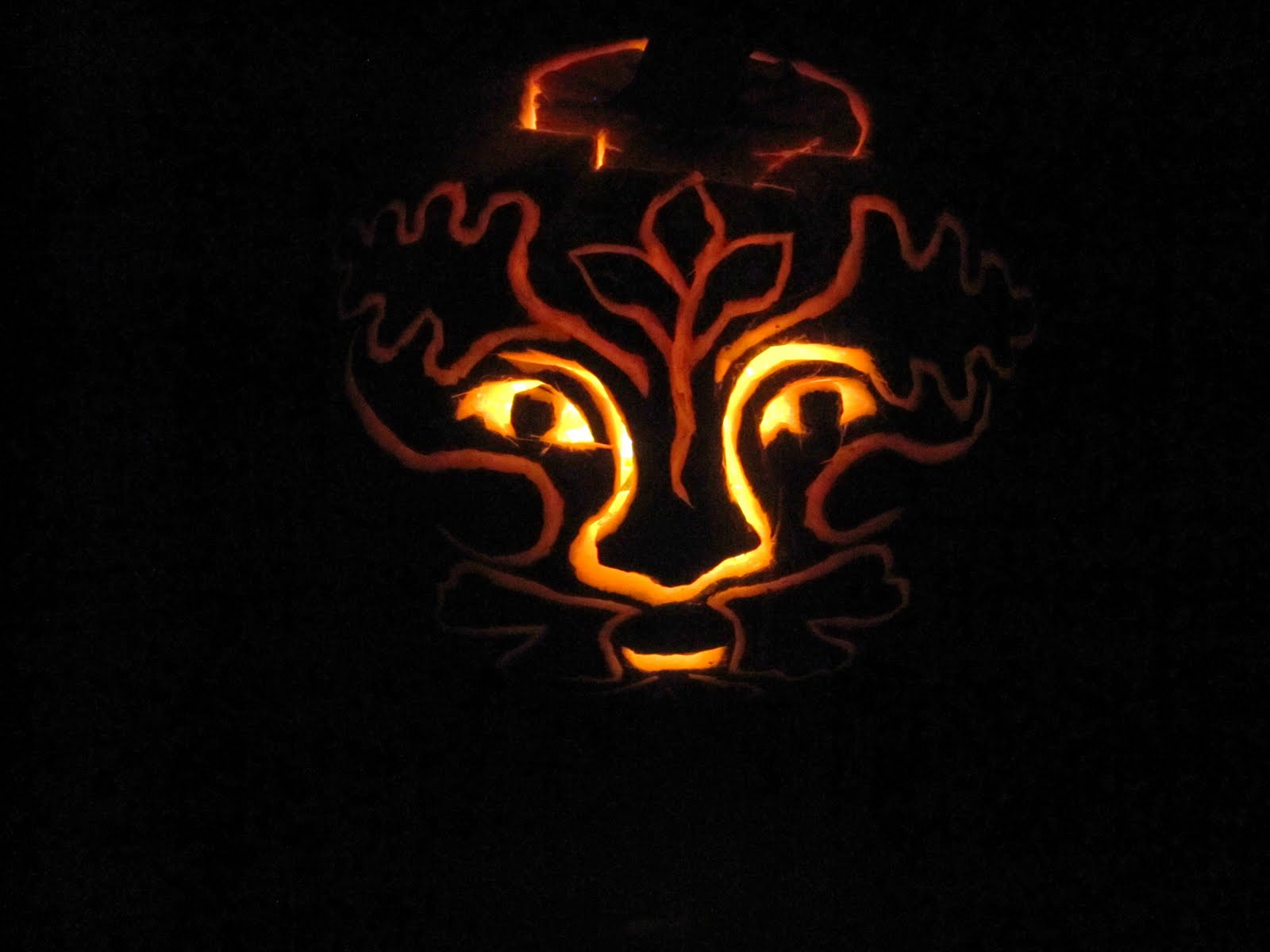
So it goes. We enter the dark half of the year ready to share stories, ready to sing, ready to dance. We carve pumpkins as our ancestors carved turnip-lanterns: a creation of absence and presence, of wholeness made hollow and emptiness illuminated, all to shine the Old Souls home to the Land of Plenty. Welcome to the season of Samhain. May you all be graced with sufficiency and abundance, goodness and grace galore!

P.S. Buidheachas gun sgur-- unceasing thanks to Andrew, Amy, Robert, Antonn, and all of our other WWOOF volunteers who have contributed to our sense of abundance. Without your contributions of time, enthusiasm, curiosity, and energy, we would have much less to celebrate!

Tuesday, September 13, 2011

On Women Warriors

We were two drab birds in a sea of pink feathers. It was "Race for the Cure" day, and hundreds of women had convened, along with the occasional spouse or offspring, in the city park on a bright September morning to run, raise awareness, and raise funds toward "the cure" for breast cancer.

Many of the women--and men--had race numbers pinned to their shirtfronts. Most also had pink placards pinned to the backs: "I run in celebration of... Aunt Sibyl." "I run in memory of...my Mom." Some had multiple names on their backs, or stitched on their pink baseball caps, or painted with glitter-glue on their running shoes. It was clear that each person there had some history of suffering or loss, some painful connection that they were determined to honour, to remember, or perhaps even transform with the beating of their hearts and the pounding of their feet. The joyful silliness of their various decorations was an understandable attempt to inject some levity into a serious remembrance.

We were there because my partner, The Piper, had taken this on as an annual volunteer gig. She was in her usual tartan gear, pleated wool in dark greens and blues, befitting the job. No-one would have expected otherwise. I, myself, had dressed to go off to church afterward, and I'd chosen a blouse and pants of earthy brown. As we walked into the pink-balloon-bedecked park full of colour-coordinated racing and walking teams, I hesitated. I felt like a wild moorhen who had blundered into a flock of migrating flamingos.

The park periphery was lined with booths from event sponsors. The Dunkin Donuts booth was mobbed, race-goers squealing with delight at the thought of unlimited free donuts and coffee. Across the way, the Hannaford supermarket booth workers were handing out healthier fare: apples, granola bars, and bananas. They had far fewer takers. (I admit I helped myself equally: one donut, one banana. They both looked perfect but tasted, well, somewhat less than that.) I looked around at the piles of "bling" arrayed in each booth: magenta shoelaces, pink ribbon temporary tattoos, treats and whigmaleeries of every description, all of them dyed or emblazoned or bedecked in some variant of rose, fuchia, blush, raspberry, carmine, cherry blossom...

The brightest display was at a booth near the stage. A banner above the booth declared "FORD CARES." Three pert young blonde women stood in the booth, each sporting a bright batik scarf tied in a uniquely fashionable style. Two men flanked the booth, handing out bling-bags to everyone who walked past. I ventured up, curious. One of the men flashed a smile and handed me a bag. I opened it to find the same scarf, with a "made in China" sticker and two brochures for Ford's charity line of Breast Cancer Awareness clothing: "Warriors in Pink." Above an array of abstract "tribal" symbols like spirals, wings, chevrons, hearts and birds, the brochure declared, "EVERY WARRIOR NEEDS AN OUTFIT."

What?

I looked around again at the hundreds of pink-bling-bedecked women around me. I thought about Rachel Carson, who wrote "Silent Spring" and died of breast cancer herself. Breast cancer is an environmental disease. It is caused by a complex array of factors, many of which are linked to the pervasive, endocrine-disrupting toxicity of the chemicals we eat, wear, drink and breathe in our mass-manufactured society. Those chemicals could be in the free pink plastic water bottles and the free temporary tattoos. They could be in the colored paper and the glitter paint. They could be in the very dyes and fixatives and wrinkle-preventers of those free "Warriors in Pink" scarves. The garment workers in China--probably women--who make those scarves could be exposed to much higher levels of those toxins than we are, we privileged North American recipients of this well-designed, well-marketed corporate charity bling.

The opening ceremonies began and The Piper went up onto the stage. I watched her stand, compose herself, and strike in the pipes. A murmur went through the crowd and people turned to look at the tall, tartan-draped figure playing tunes from another century. The harmonic drones of this ancient instrument took me back to my own "tribal" roots, and I thought about the women warriors of the Celts and the Picts. They earned the respect of their enemies not for their outfits, but for the lack thereof. They were known for charging into battle with very little on indeed, a demonstration of pure intention, confidence, and bravery that came from years of careful discipline. There is some evidence that ancient schools existed to train warrior women in the Celtic/British/Pictish lands. They began their training as girls and grew into powerful women and formidable adversaries.

The fight for cancer is unaffected by outfits. Every warrior does NOT need one. We contribute to the fight against cancer when we refuse to use the host of unnecessary chemicals around us. We build our defences by deflecting the pointed arrows of corporate target marketing. We fight cancer by refusing to pour poison in our yards and in our homes. We fight cancer by refusing to apply chemicals to our hair, our nails, and our faces. We fight cancer by educating ourselves and each other about environmental toxins. We fight cancer by speaking up and speaking out, demanding more regulations to protect our bodies, our air, our soil, our water, our land. We fight cancer by declaring that our poorer sisters and brothers in industrial waste zones deserve the same standards of environmental safety that we do.

We may yet be warriors. Let the beauty of the earth be our ritual decoration. Let our own empowered active lives be our tribute to the fallen. Let our bodies and spirits reflect the purity and healing we seek. And when a restored and healthy planet answers our efforts with showered blush-tinted blossoms, THEN we shall bedeck ourselves in pink.

Saturday, August 13, 2011

The Knights Who Say, "KNEE!"

It's been a few weeks now since the Piper underwent surgery to repair her knee. I'll spare you the details, but suffice it to say that some cartilage ended up somewhere it really ought not to have been, and the surgeon was, well, impressed--not in the way you WANT a surgeon to be.

After months of debilitating pain, followed by a fairly uncomfortable post-surgery recovery, the Piper is inching toward full farmerdom again. Last week, she sat in the midst of everyone else's activity and snipped branches down into kindling. Now she is proudly--if gingerly--hauling cartfuls of whey-soaked bread and wilted veggies down to the pigs in the name of "therapeutic strengthening."

The piper is not one to sit still while others work, so these past few months have been especially hard on her, even with WWOOFers cheerfully pitching in to take over her chores and ease my burden of managing the farm alone. She doesn't respond well to requests to slow down, rest, or be careful. In fact, if it wasn't for the fact that she's an avid Red Sox fan, I'm not sure how I would have gotten her to slow down at all--thank heavens for the concept of the "DL" (Disabled List). Only after a reminder that "even star players end up on the DL for months at a time..." could she be convinced to lay down with an ice pack for the afternoon. (It also helped that, thanks to the clock radio, she was able to lay there and listen to baseball games!)

She found the first couple of post-surgery therapy visits pretty excruciating. The muscles hadn't been engaging properly due to the inflammation and misplaced cartilage, so her kneecap was no longer being held in place and riding smoothly where it ought to be. The Piper dutifully performed her prescribed strengthening exercises and acquired a special brace to keep the kneecap from "floating."

Last week, she came home from physical therapy with a new look. Like so many other veterans of Wounded Knee before her, the Piper had borne her suffering bravely and displayed tremendous courage and fortitude. The therapist recognized these qualities and sent her home a newly-decorated hero:

Thursday, July 7, 2011

The Gael Who Cried WWOOF

Actually, this post has nothing to do with crying. We are dancing joyful jigs, here on the farm, even if we do have only three knees between the two of us.

Back in November, the Piper hurt her knee while shifting a bag of "pig bread" on uneven ground. Ever since then, it's been a challenge for her to manage the daily farm chores. Physical therapy provided a brief respite, but pain and swelling have continued and even the knee specialist confessed some measure of bafflement.

In between my part-time job and a several-month stint as a hospital chaplain, I wasn't much help to the Piper at Wounded Knee. The young couple who stayed with us during the winter helped somewhat, but their hearts were full of their own farm dreams and they moved on as soon as they found a place of their own. (That move occurred right at Beltane-- May 1st, the traditional start of the outdoor work season.)

So, what can a couple of farmers do when they have one bull, two cows, six pigs, eighteen chickens, twenty-four garden beds and three functional knees? It was time for these two Gaels to cry, WWOOF!!!

The WWOOF program counts as part of our Celtic/British agricultural emphasis, as it began in the U.K. about forty years ago. (WWOOF stands, variously, for "Willing Workers On Organic Farms" or "World-Wide Opportunities on Organic Farms.") Essentially a networking system, it allows member farms to seek assistance while allowing "WWOOFers" to seek hands-on education in sustainable agriculture. Farmers and volunteers arrange the details of each informal internship--everything from a single weekend stay to full-season or full-year engagements. While details vary widely, the program's generally accepted standard is that each half-day of volunteer labour is compensated by a full day's room and board at the host farm.

We signed up with the program in April, as soon as we confirmed our Winter couple's departure date. Inquiries started to reach us a few weeks later. WWOOFers tend to embrace opportunities for travel; our first month's inquiries included folks from Quebec, Tennessee, New York, Taiwan and Seattle. We sent e-mails back and forth, trying to ensure the best match between what we could offer and what others might want to learn. We realized we would be educating ourselves, too--expanding the range of skills needed for task-sharing and delegation. We began to brainstorm. We made lists. We talked with other farmers about the specific challenges of hosting volunteers. We invested in extra blankets and pillows. We developed our own list of questions for potential volunteers and began sending them out as e-mail inquiries appeared...and then we chose our first WWOOFer and the real fun began!

So far, the program has been everything we hoped, and more. Our WWOOFers have pitched in with enthusiasm, demonstrated a wonderful eagerness to work and learn, shown good humour, flexibility, and stick-to-itiveness. We've been fascinated by their wide range of life experiences, their travel stories, and the range of things they've seen and learned on other farms as they WWOOF their way around the world. They're not perfect--they do come to learn, after all, and occasionally a tool gets left in the rain or a veggie plant gets pulled instead of a weed--but overall the experience has been genuinely lovely. Each one comes with their own delightful surprises, too--One WWOOFer turned out to be an absolute wizard in the kitchen and helped us work on a new website for the farm. Another has a great way with a camera and has captured our creatures in some wonderful images and videos. A third came along to the farmers' market with a typewriter and raised money by creating custom poems for market-goers on the spot--an effort I'm doing my best to carry on. Shared evenings around the table are another side benefit--we've found the kind of camaraderie, diverse perspectives and wide-ranging discussions on which we thrive.

WWOOFing may not work for every farmer. We have to relax our expectations and give up some of our perfectionism. We have to remind ourselves sometimes that these folks are still learning; many of them love the idea of farming but are unfamiliar with foundational concepts and basic skills. Others come with tremendous skill AND enthusiasm and we have to reign them in a bit, as we lack the resources to tackle the range of projects they ask to undertake. It's a balancing act, to be sure, but isn't that true of farming and life in general? Might as well meet new folks, share what we know, and make new friends along the way!

So here we are, in all our three-kneed glory, dancing. With each new WWOOFer, we learn a new way to move to the music, a new way to dig the beat (beets?) and enjoy the grooves (furrows!) of this land. The WWOOFers complete our broken circle and help us keep in time as the season calls the tune.

Thursday, June 30, 2011

At Market

AT MARKET

Pea-shoots spring into waiting bags
A waft of hunger floats on pretzelled air
Crab-cakes sell fast; they must have legs
And green perennials are always there.

Oh, butter! Oh local yoghurt, milk and cheese!
Oh, dahlias dancing bold in bloom!
Will you bedeck my woodworn table, please?
Or grace my fridge? I'll make some room...

The common and the elegant share space
From booth to booth, such bounty they reveal
I cannot wait to say this heartfelt grace:
The market feeds my soul--and what a meal!

--Copyright Mainecelt 6/29/2011

Saturday, May 21, 2011

EnRaptured

Six o'clock came and went, like the swift spatter of summer rain that swept across our farm this afternoon. There were no little piles of clothing dotting the landscape, unless you count the shirt and stocking blown off the clothesline. We were left behind, it seems, by the latest in a long line of apocalyptic billboard-buying End Times trumpeters. The Rapture did not happen here. It did not include anyone we knew. It did not include us.

And yet...we did share the experience. While there was no packing of picnic baskets or precarious perching on rooftops, we did prepare ourselves for something glorious, something potentially life-changing: another day on the farm.

There are ritual elements even here. We go down on our knees regularly. Who's to say if there's a difference between planting a seed, gathering a freshly-laid egg, or offering a prayer? We fill the cup--or the trough--for each blessed creature. We break bread and scatter it for a flock, and who's to say our chickens are any less worthy of the sacrament of communion? In this place, communion is something we celebrate every day, as the creatures of the earth are tended and fruits of the earth are gathered in to be prepared for our shared table.

Today, we shared the day's work joyfully. Our first official WWOOFer contributed to our lifted spirits considerably. ("WWOOF" stands for "Willing Workers On Organic Farms" or "World-Wide Opportunities on Organic Farms." Traveling volunteers trade work for room, board, and agricultural education.) With her enthusiasm and our combined energy and effort, we plowed through a formidable list with light hearts and earnest determination. Our shared laughter rose like a hymn to all that is good and right in the world: communion, indeed.

"Prayer," says Parker Palmer, "is the practice of relatedness." Four days of wet weather have quieted and slowed the urgent growth and activity of this season, and we've been keenly aware of that relatedness- keenly aware of just how many lives rely on the return of the sun. When, early this afternoon, the clouds finally dispersed, we celebrated the sudden surge of activity. We reveled in the preening of poultry, the opening of damp blossoms, the exodus of hungry honeybees. The cattle lifted their shaggy wet heads in the pasture. Muddy ground firmed up and soil temperatures warmed, awakening plump, well-watered seeds.

We are ready for the rapture--not because we are waiting for it to happen, but because we discover it unfolding, continually, all around us. We are enraptured by the revelation that we have NOT been taken. We are Left Behind to attend to the holiness with which the tattered, beautiful world is already imbued.

We are called--it is our vocation--to remain in this richly challenging place and serve as stewards of its goodly gifts. There is no greater embodiment of grace.